Contracts
Last updated: February 9, 2026
Contracts are the primary rate structure in OpenTug. They define the commercial agreement between a customer and a provider, including validity dates, rate terms, demurrage, and contractual metadata. All towing activity (Tows) ultimately roll up to a parent Contract.
Creating a Contract
Navigate to Rates → Contracts and click New Contract.
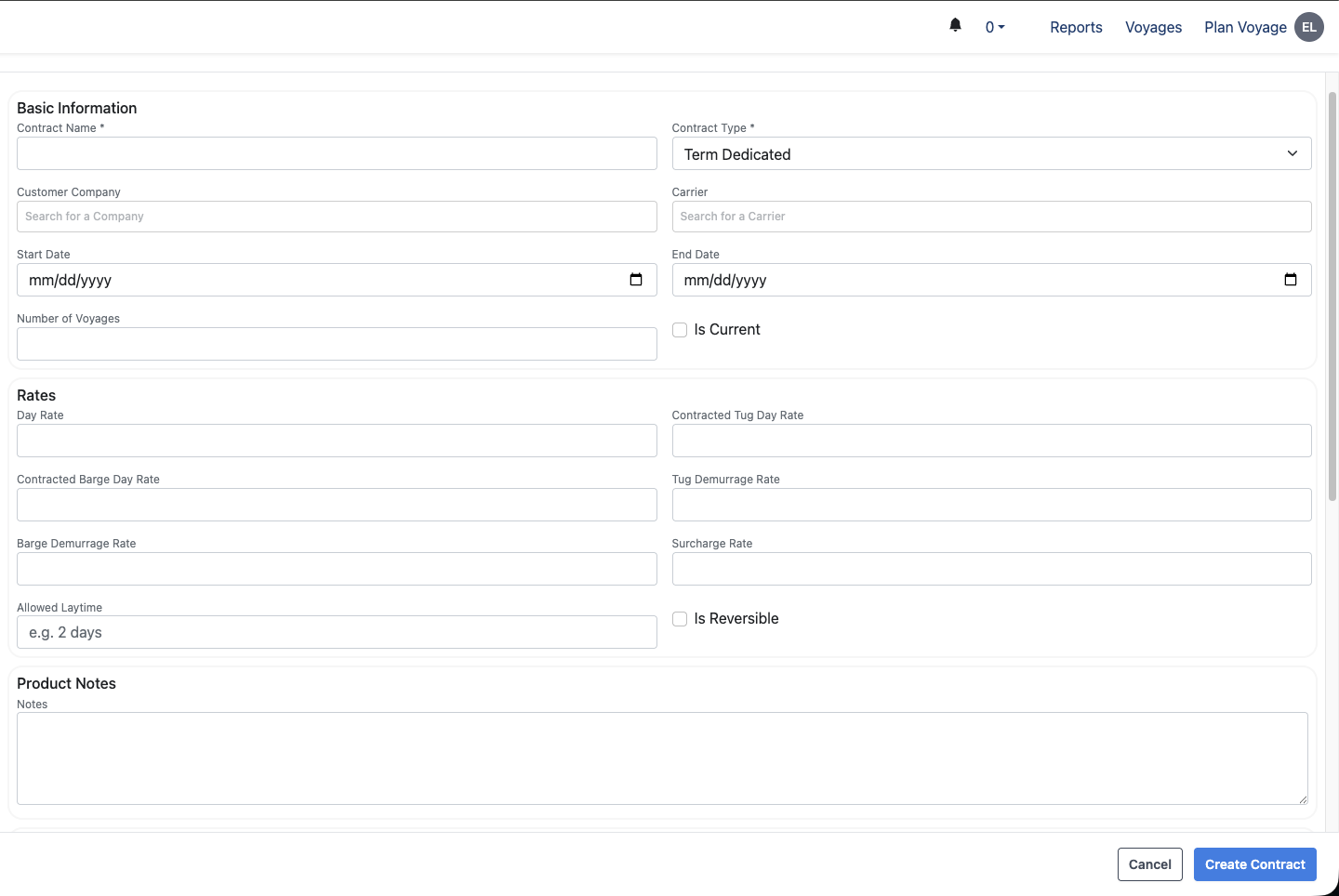
Basic Information
Contract Name – Internal-facing name used across rates and voyages
Contract Type – Term Dedicated, COA, Spot, or Flex
Customer Company – Customer associated with the contract
Carrier – Towing provider tied to the agreement
Start / End Date – Contract validity window
Is Current – Marks the contract as active
Number of Voyages – Optional reference field
Rates
Contracts can store high-level commercial terms:
Day Rate
Contracted Tug Day Rate
Contracted Barge Day Rate
Tug Demurrage Rate
Barge Demurrage Rate
Surcharge Rate
Allowed Laytime
Is Reversible – Indicates directional applicability
These fields serve as defaults and reference points for downstream Tows.
Notes & Attachments
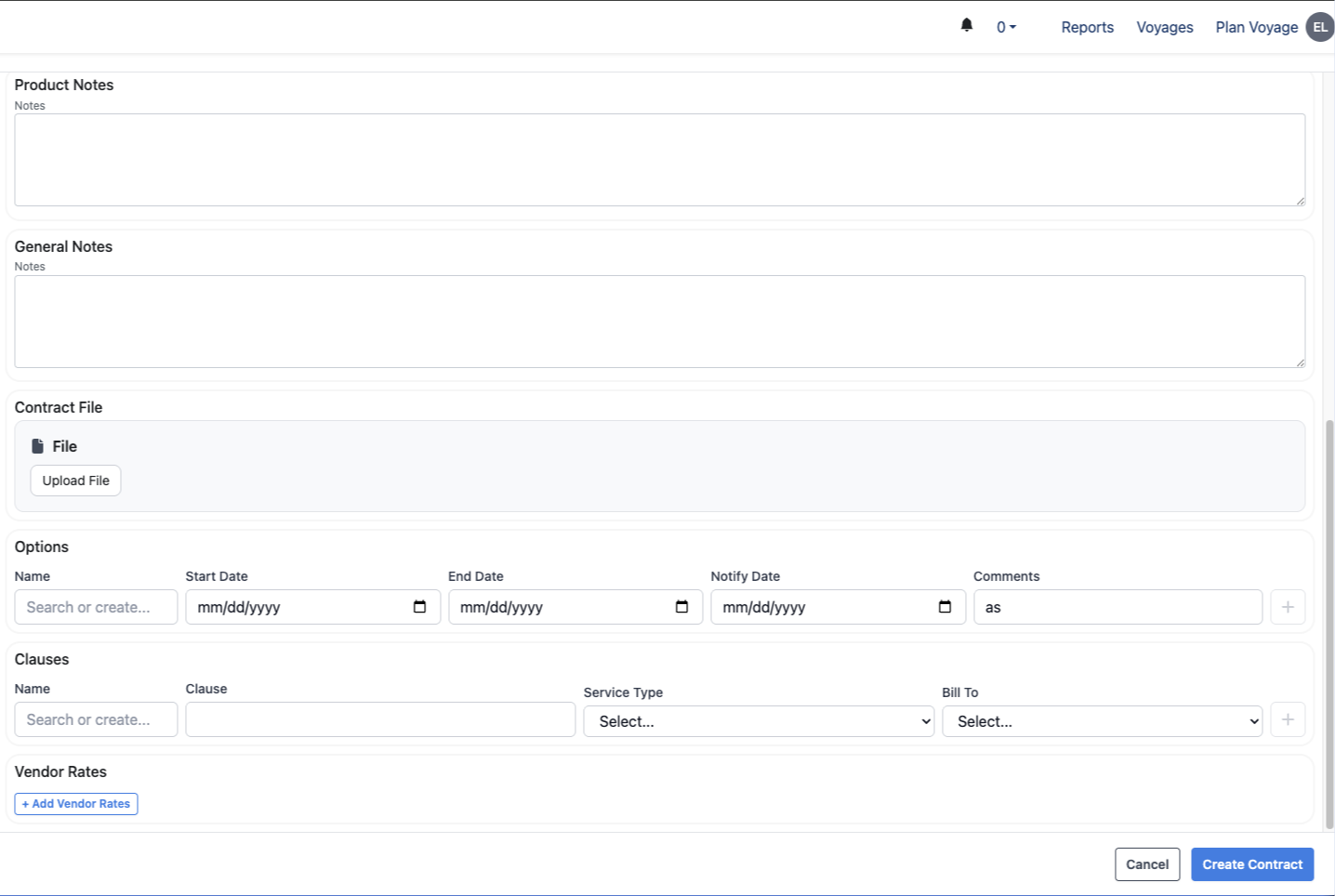
Product Notes – Operational or pricing context
General Notes – Broader contractual context
Contract File – Upload signed agreements or amendments
Options & Clauses
Options
Used for tracking milestones such as renewals or extensions:
Start Date
End Date
Notify Date
Comments
Clauses
Used to store structured contractual language:
Clause Name & Description
Service Type
Bill To (Customer, Carrier, or Third Party)
Vendor Rates
Vendor Rates can be attached to a Contract when third-party charges or passthrough costs apply.
Key Concept
Contracts define the commercial relationship. They do not need to represent a single lane or asset set — that granularity lives at the Tow level.